


L-theanine, caffeine, Lion's Mane and B vitamins: what are they?
August is back-to-school and back-to-work month. If you look into supplements, you will often come across 'stacks': combinations of two or more supplements used together. In this article you can read which ingredients are often mentioned together, what they are, and for which nutrients a health claim is or is not authorised. No health claims are authorised in the EU for L-theanine, caffeine, Lion's Mane, ashwagandha, ginkgo or Q10, so we make no statements about their effects.

Maca Powder – Organic Gelatinized – 100 g
Choose your option

L-Theanine 200 mg – 60 capsules
Choose your option

L-Theanine Suntheanine® 150 mg – 90 vegetarian capsules
Choose your option

Rhodiola-LF – Rhodiolife® extract – 60 capsules
Choose your option

Organic Ashwagandha-KSM – 60 capsules
Choose your option

Organic Chaga Powder RAW – 150 g
Choose your option

Extra Strength Ginkgo – 120 vegetarian capsules
Choose your option

Extra Strength Ginkgo – 360 vegetarian capsules
Choose your option

AHCC® 500 mg – 60 capsules
Choose your option

AHCC® 500 mg – 180 capsules
Choose your option
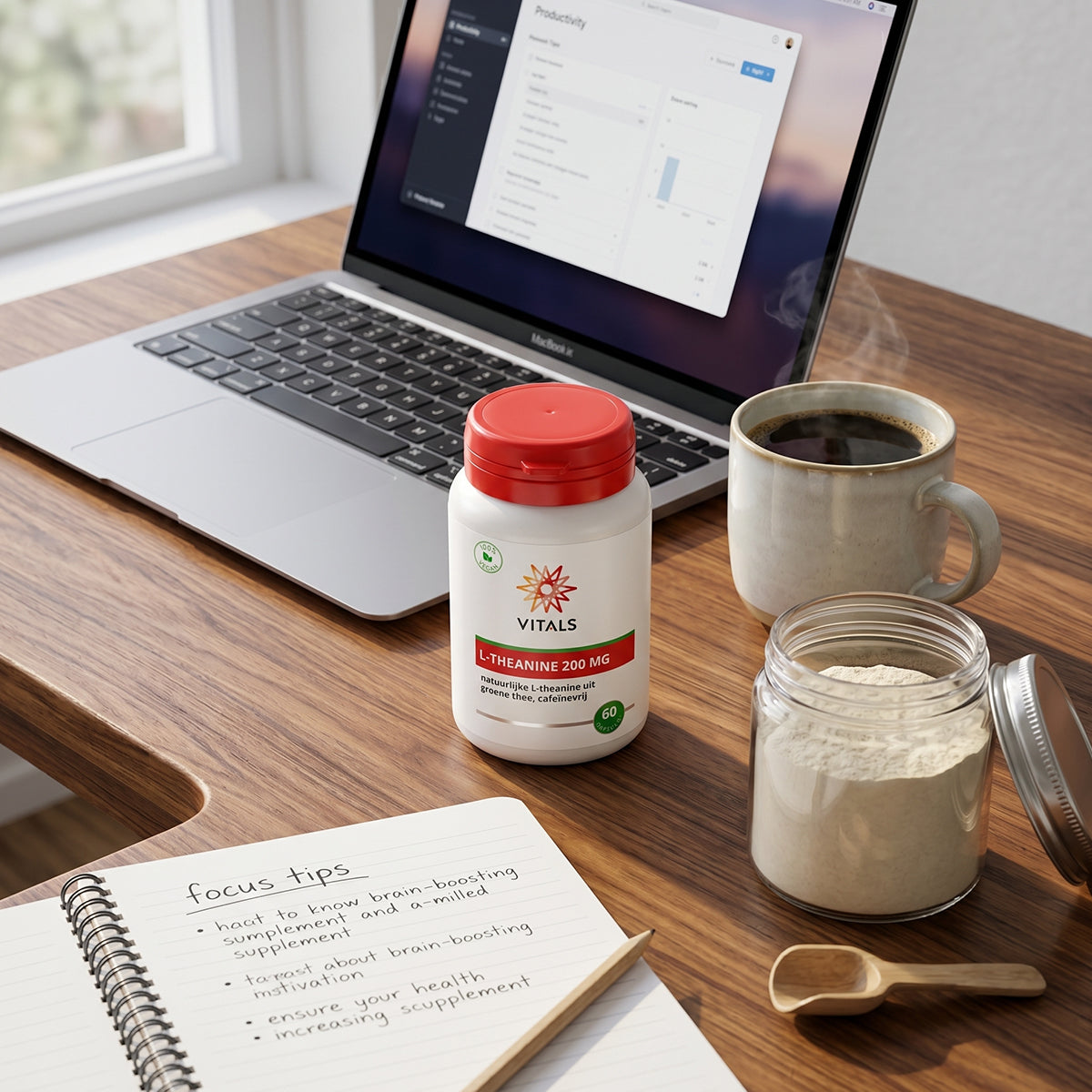
Combinations 1 to 3: from L-theanine to B vitamins
Combination 1: L-theanine and caffeine
A frequently mentioned combination is L-theanine (an amino acid found naturally in green tea) with caffeine (from coffee or green tea). No health claims are authorised in the EU for L-theanine or for caffeine.
What are they?
Caffeine occurs naturally in coffee beans, tea leaves and cocoa, among other things. In some people caffeine causes side effects such as palpitations, restlessness or poorer sleep. L-theanine is an amino acid from the tea plant (Camellia sinensis).
Ratio and amount
Usage advice often mentions a 2:1 ratio, for example 200 mg L-theanine with 100 mg caffeine (about one cup of coffee). Add up your total caffeine intake: EFSA considers up to 400 mg a day safe for healthy adults (up to 200 mg for pregnant women).
Combination 2: Lion's Mane, L-theanine and omega-3
These three are also often mentioned together:
- Lion's Mane (Hericium erinaceus): an edible mushroom, available as powder, capsules or extract. No health claim is authorised for Lion's Mane.
- L-theanine: an amino acid from the tea plant. No authorised health claim.
- Omega-3 (DHA): DHA contributes to the maintenance of normal brain function. The beneficial effect is obtained with a daily intake of 250 mg of DHA. Plantforce Vegan Omega-3 Algae Oil provides 420 mg DHA per daily dose.
Combination 3: B vitamins and magnesium
B vitamins and magnesium are also often used together. Health claims are authorised for these nutrients:
- Plantforce Vegan Vitamin B-Complex (own brand) contains, per capsule, vitamin B6 (268% RI), vitamin B12 (1500% RI) and pantothenic acid (113% RI), among others. Vitamin B6 and vitamin B12 contribute to normal psychological function and to the reduction of tiredness and fatigue. Pantothenic acid contributes to normal mental performance.
- Vitals Magnesium 100 mg with Taurine provides 100 mg magnesium (27% RI) per tablet, as magnesium bisglycinate. Magnesium contributes to normal functioning of the nervous system and to normal psychological function.
- Vitamin B12 is also available on its own.
Combinations 4 and 5: plant extracts and Q10
Combination 4: ashwagandha, Lion's Mane and blends
You will also come across combinations with plant extracts and mushrooms, sometimes called 'adaptogens' or 'nootropics'. These are umbrella terms without a recognised meaning; no health claims are authorised in the EU for these ingredients.
- Ashwagandha (Withania somnifera): a plant from the Indian tradition, for example as KSM-66 root extract.
- Cognitive Blend by KiKi Health: a blend that combines several ingredients in one product. The label shows the composition.
- Lion's Mane: an edible mushroom.
- L-theanine: an amino acid from the tea plant.
Combination 5: ginkgo, omega-3 and Q10
- Ginkgo biloba (for example Doctor's Best Extra Strength Ginkgo): an extract of the leaves of the ginkgo tree. No health claim is authorised for ginkgo.
- Omega-3 (DHA): DHA contributes to the maintenance of normal brain function, with a daily intake of 250 mg of DHA.
- Q10 (for example Doctor's Best Ubiquinol): coenzyme Q10 is a substance the body makes itself; ubiquinol is the reduced form. No health claim is authorised for Q10.
Frequently asked questions about these combinations
How long does caffeine stay in your body?
How long does caffeine stay in your body?
Caffeine is usually absorbed within 30-60 minutes and has a half-life of about 4-6 hours, depending on the person and the amount. Many people avoid caffeine after early afternoon so that it does not disturb their sleep.
Can I use such a combination every day?
Can I use such a combination every day?
If you use caffeine daily, keep an eye on your total intake: EFSA considers up to 400 mg a day safe for healthy adults (up to 200 mg for pregnant women). Omega-3 is often used daily; for herbal and mushroom extracts some people choose cyclical use. Always follow the recommended daily dose on the label.
Can I combine these supplements with stimulant medication?
Can I combine these supplements with stimulant medication?
If you take stimulant medication, always consult the prescribing doctor before adding supplements. Some combinations, especially with caffeine, can interact.
What can I do during an exam period?
What can I do during an exam period?
No health claim is authorised for any supplement in relation to studying or exams. The basics are enough sleep, regular meals, exercise and breaks. If you want to use a supplement, choose on the basis of authorised claims. Plantforce Vegan Vitamin B-Complex contains vitamin B6, vitamin B12 and pantothenic acid, among others: vitamin B6 and vitamin B12 contribute to normal psychological function, and pantothenic acid contributes to normal mental performance. No health claims are authorised for Lion's Mane, L-theanine or ashwagandha.
Can I use a Cognitive Blend instead of separate supplements?
Can I use a Cognitive Blend instead of separate supplements?
Yes. KiKi Health Cognitive Blend combines several ingredients in one product. Advantage: convenience, one product instead of several. Disadvantage: less control over the amount of each individual ingredient. The label shows the composition and the recommended daily dose.
Combining supplements yourself (and what to avoid)
Putting together your own combination
Step 1 — Decide what you are looking for
Start by asking what you are looking for, then check which nutrients have an authorised health claim. That way you know what can and cannot be said about a product.
Step 2 — Start with one element
Starting three new supplements at once makes it hard to keep track of what you use. Start with one product and then add a second if you wish.
Step 3 — Watch doses and combinations
Always follow the recommended daily dose on the label and add up the total intake when combining products, especially with caffeine.
Step 4 — Combine with the basics
No supplement makes up for structurally poor sleep, too little exercise or a one-sided diet. Aim for 7-9 hours of sleep, regular exercise, enough water, regular meals and moments of relaxation.
What to avoid
- Starting too much at once — you lose track.
- Too much caffeine — EFSA considers up to 400 mg a day (about 4 cups of coffee) safe for healthy adults; up to 200 mg for pregnant women.
- Supplements without a clear reason — choose deliberately and specifically.
- Ignoring sleep — no supplement makes up for structurally poor sleep.
If you combine supplements, do so deliberately and keep it simple. No health claims are authorised for L-theanine, caffeine, Lion's Mane, ashwagandha, ginkgo or Q10. There is one for DHA: DHA contributes to the maintenance of normal brain function (with a daily intake of 250 mg of DHA). Sleep, exercise and diet are the foundation; supplements are an addition.
Disclaimer: This article is for information only and does not replace medical advice. A food supplement is not a substitute for a varied, balanced diet and a healthy lifestyle. If in doubt or if you take medication, consult a doctor or pharmacist. Do not exceed the recommended daily dose. Keep out of the reach of young children.
Popular Products
Maca Powder – Organic Gelatinized – 100 g
Choose your option
L-Theanine 200 mg – 60 capsules
Choose your option
L-Theanine Suntheanine® 150 mg – 90 vegetarian capsules
Choose your option
Rhodiola-LF – Rhodiolife® extract – 60 capsules
Choose your option
Organic Ashwagandha-KSM – 60 capsules
Choose your option
Organic Chaga Powder RAW – 150 g
Choose your option
Extra Strength Ginkgo – 120 vegetarian capsules
Choose your option
Extra Strength Ginkgo – 360 vegetarian capsules
Choose your option
AHCC® 500 mg – 60 capsules
Choose your option


