


Omega-3: DHA and the maintenance of normal brain function

Vegan Omega-3 Algae Oil - 120 softgels
Choose your option

Fermented Cod Liver Oil – 120 capsules
Choose your option

Fermented Cod Liver Oil & Concentrated Butter Oil – 120 capsules
Choose your option

Fermented Skate Liver Oil – 120 capsules
Choose your option

Choose your option

Fermented Cod Liver Oil & Concentrated Butter Oil - Cinnamon - 188 ml gel
Choose your option

Fermented Cod Liver Oil & Concentrated Butter Oil – Chocolate – 188 ml gel
Choose your option

Fermented Cod Liver Oil & Concentrated Butter Oil – Natural – 188 ml gel
Choose your option

Fermented Cod Liver Oil – Orange – 180 ml
Choose your option

Choose your option
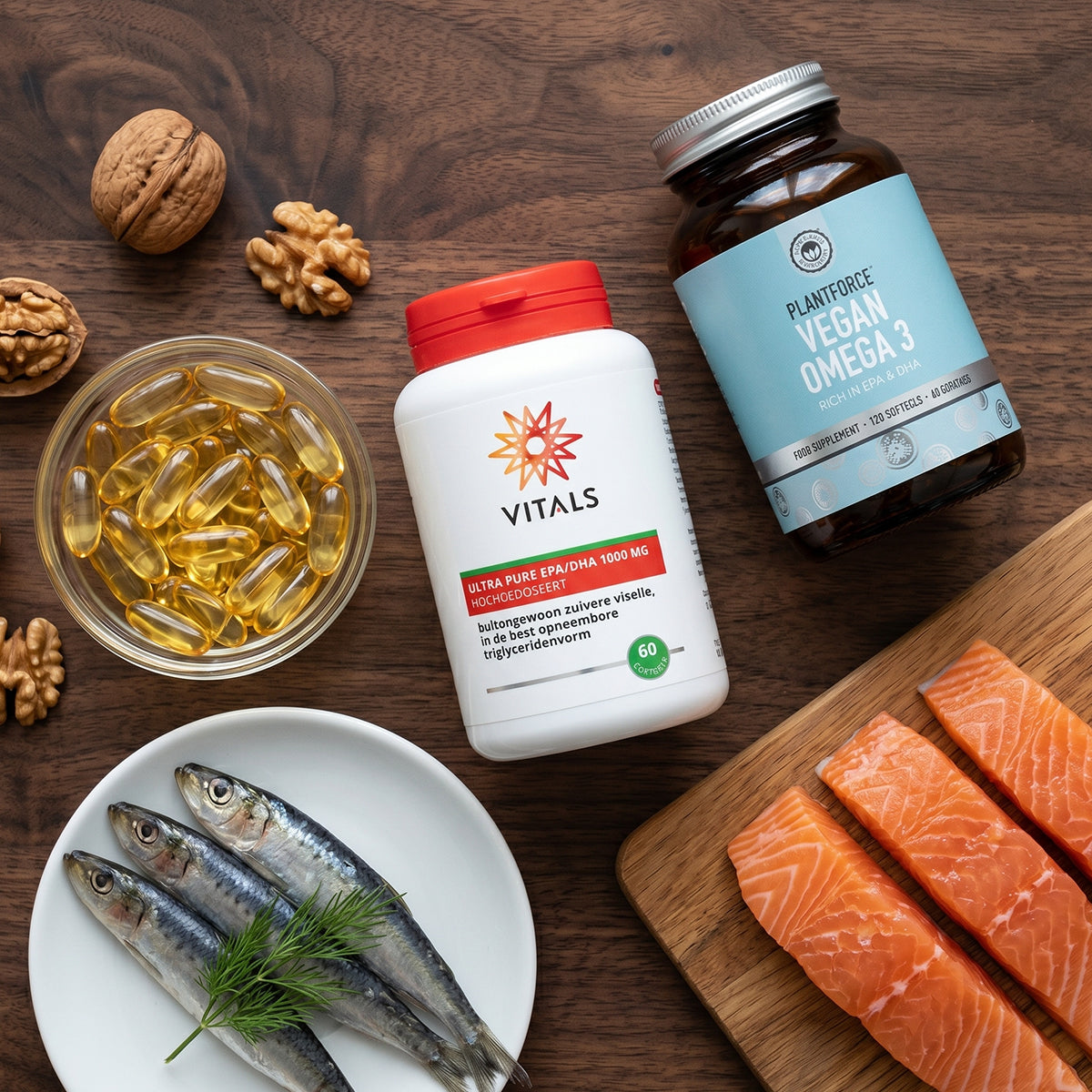
What are omega-3, DHA and EPA?
Omega-3 is a family of polyunsaturated fatty acids. Three are particularly relevant: ALA (alpha-linolenic acid), EPA (eicosapentaenoic acid) and DHA (docosahexaenoic acid). ALA comes from plant sources (flaxseed, walnuts, chia seeds), EPA and DHA from fish, shellfish or algae.
The key difference: your body converts ALA into EPA and DHA only to a limited extent (often less than 5%). If you want to get EPA and DHA from purely plant-based sources, you can choose algae omega-3 supplements. For those who eat fish, oily fish (salmon, mackerel, herring, sardines) is a rich source.
Source: EU Register on nutrition and health claims (Regulation (EU) 432/2012 — officially authorised health claims).
DHA and your brain
DHA is a structural component of the brain:
- Cell membranes — DHA is an important building block of nerve cell membranes.
- Synapses — the concentration of DHA is highest at synapses (connections between nerve cells).
- Research — researchers are also studying substances formed from EPA and DHA, such as resolvins.
DHA contributes to the maintenance of normal brain function. The beneficial effect is obtained with a daily intake of 250 mg of DHA.
How much do you need and which form suits you?
EFSA sets an adequate intake of 250 milligrams of EPA + DHA per day for adults; you can reach that by eating oily fish 1-2 times a week. For pregnant and breastfeeding women, EFSA advises an extra 100-200 milligrams of DHA. If you eat little or no fish, a supplement is a practical option. Always follow the recommended daily dose on the label.
Which form of omega-3 suits you?
Fish oil (capsules or liquid)
Fish oil from small fish (sardines, anchovies, mackerel) is the classic source, relatively affordable and available in many concentrations. Look at the amount of EPA + DHA per capsule (not just the total amount of fish oil) and preferably at independent laboratory testing for heavy metals.
Triglyceride form or ethyl ester form
Many fish oil supplements provide omega-3 in ethyl ester form (a concentrated form). The triglyceride form is the form in which omega-3 naturally occurs in fish. The label shows which form a product contains.
Cod liver oil
Cod liver oil is the traditional Northern European source of omega-3. Besides EPA and DHA it naturally contains vitamin A and vitamin D. Fermented cod liver oil (such as Green Pasture) is a traditionally prepared variant. Note: because of the vitamin A, pregnant women are advised not to use cod liver oil without consulting their midwife or doctor.
Algae omega-3 (vegan)
For those who eat vegan or do not want fish products: algae oil provides DHA (and, depending on the product, EPA), the original source from which fish get their omega-3. Vegan and without fishing.
Krill oil
Krill oil provides omega-3 in phospholipid form and also contains astaxanthin, a red pigment. Often more expensive per milligram of EPA + DHA than fish oil.
Frequently asked questions about omega-3 for the brain
How much DHA is in 1 serving of salmon?
How much DHA is in 1 serving of salmon?
A 100-gram portion of wild salmon provides about 1,500-2,000 milligrams of EPA + DHA; farmed salmon is often lower (around 1,000 mg). If you eat oily fish 1-2 times a week, you usually reach the recommended amount.
When is the best time to take omega-3?
When is the best time to take omega-3?
With a meal containing fat: omega-3 is fat-soluble. You can split the intake over two moments a day if you like. Timing matters less than regularity.
How do I know if my omega-3 supplement is of good quality?
How do I know if my omega-3 supplement is of good quality?
Look at: (1) the amount of EPA + DHA per capsule (not just the total amount of fish oil), (2) the form (triglyceride or ethyl ester), (3) independent laboratory testing for heavy metals and oxidation and (4) packaging that protects the product from light and oxygen. For algae omega-3: check the amount of DHA per capsule.
May I combine omega-3 with blood thinners?
May I combine omega-3 with blood thinners?
High doses of omega-3 can affect blood clotting. If you take anticoagulants (blood thinners), always consult your doctor or anticoagulation clinic before using an omega-3 supplement.
Is vegan algae omega-3 an alternative to fish oil?
Is vegan algae omega-3 an alternative to fish oil?
Yes. Algae oil provides DHA and, depending on the product, EPA as well. Fish oil often contains more EPA per capsule. Check the label to see how much EPA and DHA a product provides per daily dose.
When does omega-3 get extra attention?
DHA and normal brain function
Omega-3 often gets extra attention in the following situations:
- People who eat little or no oily fish — if you eat oily fish less than once a week, a supplement is a practical addition. DHA contributes to the maintenance of normal brain function (with a daily intake of 250 mg of DHA).
- Vegans and vegetarians — algae oil provides DHA and, depending on the product, EPA.
- Pregnant women and breastfeeding women — maternal intake of DHA contributes to the normal brain development of the foetus and breastfed infants. The beneficial effect is obtained with a daily intake of 200 mg of DHA in addition to the recommended daily intake of 250 mg of omega-3 fatty acids (DHA and EPA) for adults. During pregnancy, always consult your midwife or doctor.
- People who want EPA as well as DHA — some products provide a higher proportion of EPA. EPA and DHA contribute to the normal function of the heart (with a daily intake of 250 mg of EPA and DHA).
With 1-2 portions of oily fish a week you usually reach the recommended amount; if you eat little or no fish, a supplement is a targeted option. The choice between fish oil, cod liver oil, algae or krill depends on your preference. Look at the amount of EPA and DHA per daily dose and at independent quality testing.
Disclaimer: This article is for information only and does not replace medical advice. A food supplement is not a substitute for a varied, balanced diet and a healthy lifestyle. If in doubt or if you take medication, consult a doctor or pharmacist. Do not exceed the recommended daily dose. Keep out of the reach of young children.
Popular Products
Vegan Omega-3 Algae Oil - 120 softgels
Choose your option
Fermented Cod Liver Oil – 120 capsules
Choose your option
Fermented Cod Liver Oil & Concentrated Butter Oil – 120 capsules
Choose your option
Fermented Skate Liver Oil – 120 capsules
Choose your option
Choose your option
Fermented Cod Liver Oil & Concentrated Butter Oil - Cinnamon - 188 ml gel
Choose your option
Fermented Cod Liver Oil & Concentrated Butter Oil – Chocolate – 188 ml gel
Choose your option
Fermented Cod Liver Oil & Concentrated Butter Oil – Natural – 188 ml gel
Choose your option
Fermented Cod Liver Oil – Orange – 180 ml
Choose your option


