

Psyllium fiber (also called psyllium husk or psyllium fiber ) is the seed coat of the Plantago ovata plant. It is naturally rich in soluble fiber and forms a soft gel when mixed with water. This makes it popular as a dietary fiber supplement and as a binding and structural agent in (gluten-free) baking recipes.
1) What is psyllium fiber?
Psyllium fibers are the dried husks surrounding the seeds of Plantago ovata . These fibers are virtually tasteless, mix easily with moisture, and are naturally gluten-free. You can find them as husk , fine powder or Capsules . The choice of shape depends on your application: membranes provide structure in dough, while powder mixes quickly into drinks or porridge.
2) What types of dietary fiber are there?
- Fermentable fibers: are broken down in the large intestine by bacteria.
- Non-/less-fermentable fibers: are hardly broken down and mainly increase the volume of the intestinal contents.
Psyllium is often used because of its strong water-binding capacity: it forms a gel-like mass with moisture and thus provides structure to drinks and dough. See psyllium as supplement on your fiber-rich diet with vegetables, fruit, whole grains, legumes, nuts and seeds.
3) How do you get enough fiber per day?
As a general guideline, EFSA recommends for adults approx. 25 g dietary fiber per day (adequate intake). In the Netherlands, the Nutrition Centre uses ±25 g/day for women and Approximately 30 g/day for men . Build up your intake through a fiber-rich diet and use psyllium only as a practical supplement.
4) How can you use psyllium fiber?
In water or (unsweetened) juice
- Fill a glass with water or unsweetened juice.
- Sprinkle a small amount psyllium (husk or powder) in the glass.
- Stir immediately and drink. Always use with sufficient moisture.
In yoghurt, porridge or smoothie
Stir into yogurt, cottage cheese, porridge, or blend into a smoothie. Start small (e.g., 1 teaspoon) to get used to the texture and mouthfeel.
In (gluten-free) baked goods
- Use psyllium to elasticity and cohesion to give to dough.
- Home bakers often use this as a starting point approximately 5% husk compared to the flour weight (e.g. ±20 g on 400 g flour). Add sufficient liquid and/or hydrate the husk briefly until gelling before mixing it into the dough.
5) Dosage & intake (safe and practical)
- Always follow the label of your product; composition and fineness (husk vs. powder) vary by brand.
- Start low (e.g. 1 teaspoon) and build up gradually.
- Hydration: Drink plenty of water throughout the day.
- Medication: Fiber can affect the absorption of some medications. Take them at different times and, if in doubt, consult your doctor or pharmacist. (This is for general information only and should not replace medical advice.)
6) Precautions, label tips & allergens
- Do not use in swallowing difficulties . Stop if you experience discomfort.
- Allergens/cross-contamination: If you want to bake gluten-free, choose products with a clear (gluten) declaration and work cleanly.
- Pregnancy/medical situation/medication: Consult your doctor or pharmacist and follow the instructions for use.
- Claims & Compliance: Avoid medical claims on foodstuffs; these are prohibited in the Netherlands/EU (NVWA).
Did you know that you can also bake gluten-free with psyllium fiber?
Psyllium husk is also a very popular ingredient in gluten-free baking! Gluten normally provides elasticity and structure to baked goods like bread, wraps, and cakes. This is often lacking in gluten-free flours. People who are gluten intolerant solve this problem by adding psyllium husk fiber to their dough or batter. Generally, the ratio is 5 to 10 grams per 500 grams of flour for good baking results.
7) Baking with psyllium: sample recipe (neutral, NVWA-proof)
Please note: Use certified gluten-free ingredients if you want to bake gluten-free.
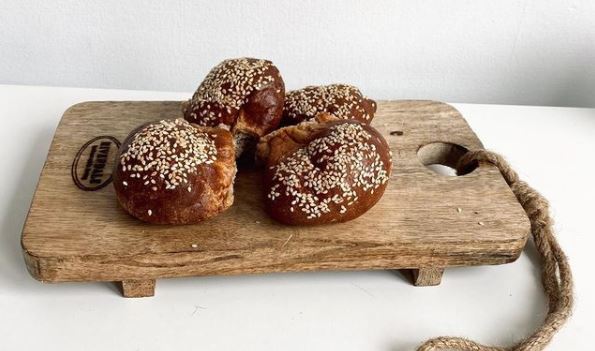
These delicious and easy-to-make psyllium husk rolls are perfect for a low-carb diet. They give you that "bread feeling" without the carbs. Linda, our former social media queen, has created a recipe video so you can make them too.
(Oven at 160 degrees)
Ingredients psyllium husk rolls:
- 130g Greek yogurt
- 4 eggs (M)
- 40g almond flour
- 30g psyllium husk
- 10g coconut flour
- 2 tsp baking powder
- pinch of salt
8) Frequently Asked Questions (FAQ)
Is psyllium fiber the same as psyllium husk?
Yes. "Husk" refers to the outer membranes; in Dutch, we usually call this psyllium fiber.
Husk or powder: which do I choose?
For drinks/porridge is powder handy (mixes quickly). For bread and dough membranes Often the best texture. It also depends on preference and the recipe.
How much psyllium per day?
There is no one size fits all. Think of psyllium as supplement on your total fiber intake from food. Follow the instructions on the label and gradually increase your intake. EFSA/Netherlands Nutrition Centre uses 25–30 g/day as a guideline for total Fiber intake (not specifically psyllium). :contentReference[oaicite:2]{index=2}
When should I take psyllium: before or after a meal?
Choose a fixed time that's convenient for you and always drink plenty of water. Follow the label on your product.
Can I substitute psyllium with something else?
Alternatives (such as xanthan gum or ground flaxseed) bind differently and produce a different texture. Results may vary; testing is recommended.
Is psyllium gluten free?
Naturally yes, but be aware of cross-contamination and, if necessary, choose products with a clear gluten-free declaration.
9) Buying Psyllium: what to look out for
- Ingredients: preferably 100% psyllium (husk or powder), without unnecessary additives.
- Shape & fineness: husk for bread structure; powder for drinks or exact dosage.
- Quality: note producer/country of origin and, where available, quality controls.
- Label & allergens: check claims, batch information and storage advice (dry, cool, closed).
10) Summary
- Psyllium fibers are soluble fibers from Plantago ovata that form a gel with water.
- Use them as a fiber supplement and as a binding/structuring agent in (gluten-free) recipes.
- Always follow the label, build up slowly and drink plenty of water.
- Keep medical claims out of your communication; refer questions to a doctor or pharmacist.


