


Omega-3 for your Brain: DHA and EPA for Brain Health | Brain and Focus Month

Vegan Omega-3 Algae Oil - 120 softgels
Choose your option

Choose your option

Fermented Cod Liver Oil & Concentrated Butter Oil - 120 caps
Choose your option

Choose your option

Choose your option

Fermented Cod Liver Oil & Concentrated Butter Oil (Cod Liver Oil/Butter Oil) Cinnamon - 188ml gel
Choose your option

Fermented Cod Liver Oil & Concentrated Butter Oil (Cod Liver Oil/Butter Oil) Chocolate - 188ml gel
Choose your option

Fermented Cod Liver Oil & Concentrated Butter Oil (Cod Liver Oil/Butter Oil) Natural - 188ml gel
Choose your option

Fermented Cod Liver Oil Orange - 180ml
Choose your option

Choose your option
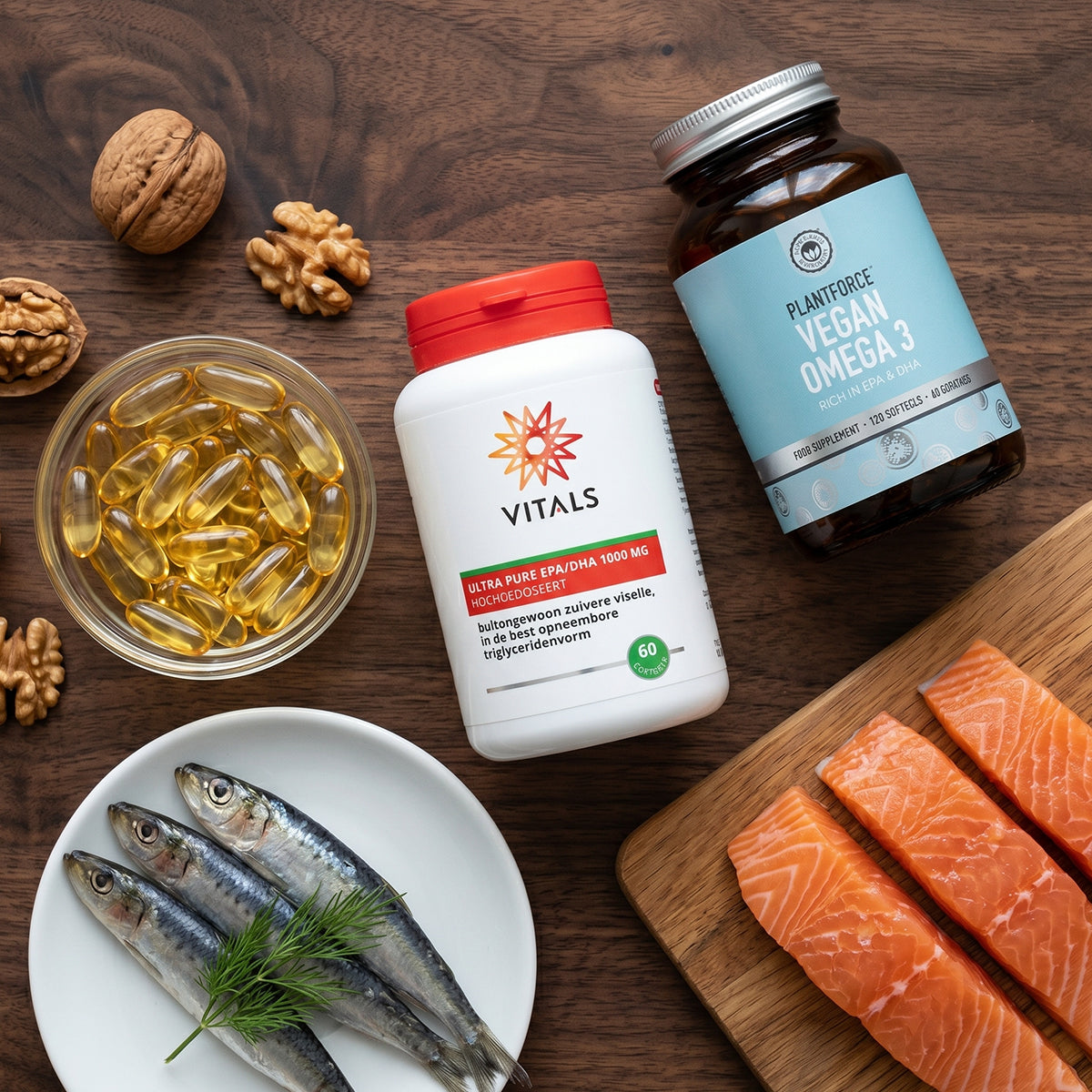
What are omega-3, DHA, and EPA, and how do they work in your brain?
Omega-3is a family of polyunsaturated fatty acids. Three are particularly relevant to our health: ALA (alpha-linolenic acid), EPA (eicosapentaenoic acid), and DHA (docosahexaenoic acid). ALA comes from plant sources (flaxseed, walnuts, chia seeds), while EPA and DHA come from fish, shellfish, or algae.
The important distinction: Your body must convert ALA to EPA and DHA to achieve the active form — and this conversion is limited in most people (often less than 5%). For those who want to build up EPA and DHA through purely plant-based sources, algae omega-3 supplementsare the most direct route. For people who eat fish: fatty fish (salmon, mackerel, herring, sardines) is a rich direct source.
Source: EU Register on nutrition and health claims(Regulation (EU) 432/2012 — officially authorised health claims).
How does DHA work in your brain?
DHA is not a "bonus" for your brain — it is a structural component of it. Three specific roles:
- Membrane flexibility— DHA makes the cell membranes of nerve cells flexible, which supports rapid signal transmission.
- Synapse function— DHA concentration is highest at synapses (connections between nerve cells).
- Inflammation regulation— EPA and DHA are precursors to resolvins and protectins, substances that dampen inflammatory responses.
DHA contributes to the maintenance of normal brain function. A beneficial effect is obtained with a daily intake of 250 mg of DHA.
How much do you need and what form suits you?
For most adults, 250-500 milligrams of EPA + DHA per day is a good maintenance dosage — an amount achievable with fatty fish 1-2 times a week. For those who eat little or no fish, a supplement is the most practical route.
For specific goals, the dosage is often higher:
- Brain-specific: 500-1000 mg DHA per day
- Cardiovascular: 1000-2000 mg EPA + DHA per day (in consultation)
- Pregnancy: minimum 200 mg DHA on top of normal intake
- Sport and recovery: 2000-3000 mg EPA + DHA per day during peak training periods
Which form of omega-3 is right for you?
Fish oil (capsules or liquid)
Fish oilfrom small fish (sardines, anchovies, mackerel) is the classic source — relatively inexpensive and available in many concentrations. Pay attention to the EPA + DHA content per capsule (not just the total fish oil amount), and preferably to third-party laboratory control for heavy metal-free status.
Triglyceride form vs. ethyl ester form
Many cheap fish oil supplements provide omega-3 in ethyl-ester form (a chemically concentrated form). The triglyceride form is the natural form as found in fish. For those who prioritize quality, a triglyceride form is often preferred.
Cod liver oil
Cod liver oilis the traditional Northern European omega-3 source. In addition to EPA and DHA, it also contains natural vitamin Aand D. Fermented cod liver oil (such as Green Pasture) is a quality option that retains natural micro-nutrients. Taste: present, but many brands have flavor variants (lemon, orange) to soften this.
Algal omega-3 (vegan)
For the vegan target group or for those who do not want fish derivatives: algal omega-3 delivers direct DHA (and to a lesser extent EPA) — the original source from which fish obtain its omega-3. Vegan, sustainable (no fishing burden), and suitable for long-term use.
Krill oil
Krill oil delivers omega-3 in phospholipid form. Also contains astaxanthin (an antioxidant). Often more expensive per milligram of EPA + DHA than fish oil.
Frequently asked questions about omega-3 for the brain
How much DHA is in 1 serving of salmon?
How much DHA is in 1 serving of salmon?
A 100-gram serving of wild salmon provides approximately 1500-2000 milligrams of EPA + DHA. A serving of farmed salmon is lower (around 1000 mg). For those who eat fatty fish 1-2 times a week, additional supplementation is often not necessary for maintenance levels.
When is the best time to take omega-3?
When is the best time to take omega-3?
With a fat-containing meal — omega-3 is fat-soluble and better absorbed then. Dividing it into two intakes per day can keep plasma levels slightly more even. The time of day is less important for the effect than continuity.
How do I know if my omega-3 supplement is of good quality?
How do I know if my omega-3 supplement is of good quality?
Note: (1) clear EPA + DHA per capsule (not just total fish oil), (2) triglyceride form preferred, (3) third-party lab testing for heavy metals and oxidation, (4) packaging that protects the product from light and oxygen. For algae omega-3: pay attention to the actual DHA content (often lower than fish oil per capsule).
May I combine omega-3 with blood thinners?
May I combine omega-3 with blood thinners?
High doses of omega-3 (above approximately 3 grams per day) may have a mild blood-thinning effect. If you are taking blood thinners: consult your doctor or thrombosis service for appropriate adjustments.
Does vegan algal omega-3 work as well as fish oil?
Does vegan algal omega-3 work as well as fish oil?
For DHA: yes – algae directly provide DHA, and its absorption is comparable to fish oil. For EPA: algae supplements often provide less EPA than fish oil, although formulations are rapidly improving. For individuals specifically seeking EPA for cardiovascular or mood purposes, a high-dose EPA supplement (from fish) may be more effective.
When is omega-3 specifically for your brain?
DHA and normal brain function
Omega-3 for the brain is beneficial in a number of life or work situations:
- Knowledge workers and students who want to maintain their daily DHA intake –DHA contributes to the maintenance of normal brain function.
- 50+ target group focused on supporting normal brain function –DHA contributes to the maintenance of normal brain function.
- People who want to supplement EPA in addition to DHA –some formulations provide a higher EPA content.
- Pregnantwomenand new mothers– DHA is crucial for the neurological development of babies and young children.
- Those who eat little fish– if you eat fatty fish less than once a week, a supplement is often advisable.
For DHA, there is a recognized EFSA claim: DHA contributes to the maintenance of normal brain function (at 250 mg per day). With 1-2 servings of fatty fish per week, you often reach the basic level; for those who want more, or who do not eat fish, a supplement is a targeted route. The choice between fish oil, cod liver oil, algae, or krill depends on your preference and goal – quality (form, third-party control) often matters more than just brand or price.
Disclaimer:This article is for informational purposes only and does not replace medical advice. A dietary supplement is not a substitute for a varied and balanced diet and a healthy lifestyle. In case of doubt or medication use: consult a doctor or pharmacist. Do not exceed the recommended daily dosage. Keep out of reach of young children.
Populaire Producten
Vegan Omega-3 Algae Oil - 120 softgels
Choose your option
Choose your option
Fermented Cod Liver Oil & Concentrated Butter Oil - 120 caps
Choose your option
Choose your option
Choose your option
Fermented Cod Liver Oil & Concentrated Butter Oil (Cod Liver Oil/Butter Oil) Cinnamon - 188ml gel
Choose your option
Fermented Cod Liver Oil & Concentrated Butter Oil (Cod Liver Oil/Butter Oil) Chocolate - 188ml gel
Choose your option
Fermented Cod Liver Oil & Concentrated Butter Oil (Cod Liver Oil/Butter Oil) Natural - 188ml gel
Choose your option
Fermented Cod Liver Oil Orange - 180ml
Choose your option


